 SewMendStitch
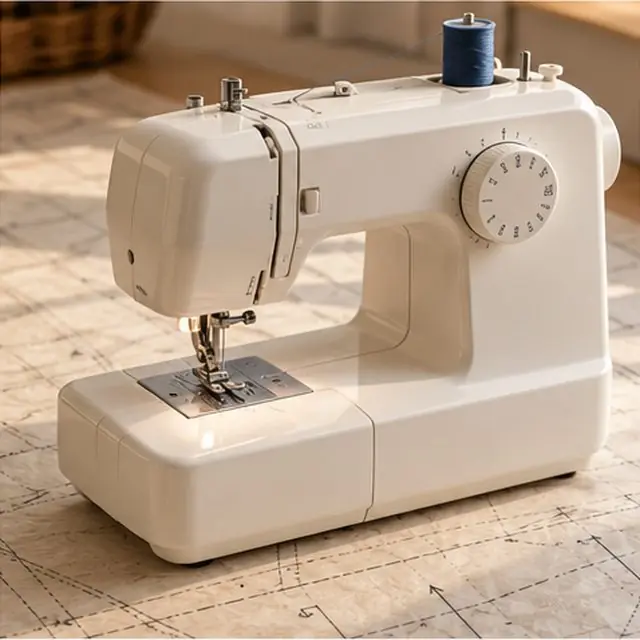
Sewing Machine Basics
For anyone who owns a basic domestic machine and has not used it yet. Learn the parts, thread it, and sew straight seams on scrap before touching a garment.
Before you sew a garment
This course is for someone who owns a basic home sewing machine, or has inherited one, and has not used it. It starts away from clothes on purpose. You will name the parts, wind and insert a bobbin, thread the top, and then sew lines on paper and scrap fabric until the machine feels predictable. Getting these right early prevents most later trouble. Nearly every tangle, skipped stitch or jammed bobbin traces back to threading with the presser foot down, a bobbin put in the wrong way round, or a blunt or wrong-type needle.
Machines differ. The lessons describe what most domestic machines share, such as a top thread that passes through a take-up lever and tension discs, a bobbin underneath, and a presser foot lever. Your manual shows exactly where those parts sit on your model, so keep it next to you for the first few lessons.
From straight lines to real seams
Core skills cover the habits that make seams neat: guiding fabric along the seam allowance marks on the throat plate, securing the ends, turning corners with the needle down, and easing around curves. After that the course moves to finishes and small techniques that turn up in repairs and alterations: zigzag edges, hems, topstitching, darts, elastic casings and sewing denim and knits.
If the machine misbehaves at any point, the troubleshooting lesson works through problems by what the stitches look like, and the guide to choosing a first machine explains which features matter if you are still deciding what to buy.
Know your machine
Core skills
Simple techniques
Guides for this course
 Machine sewing
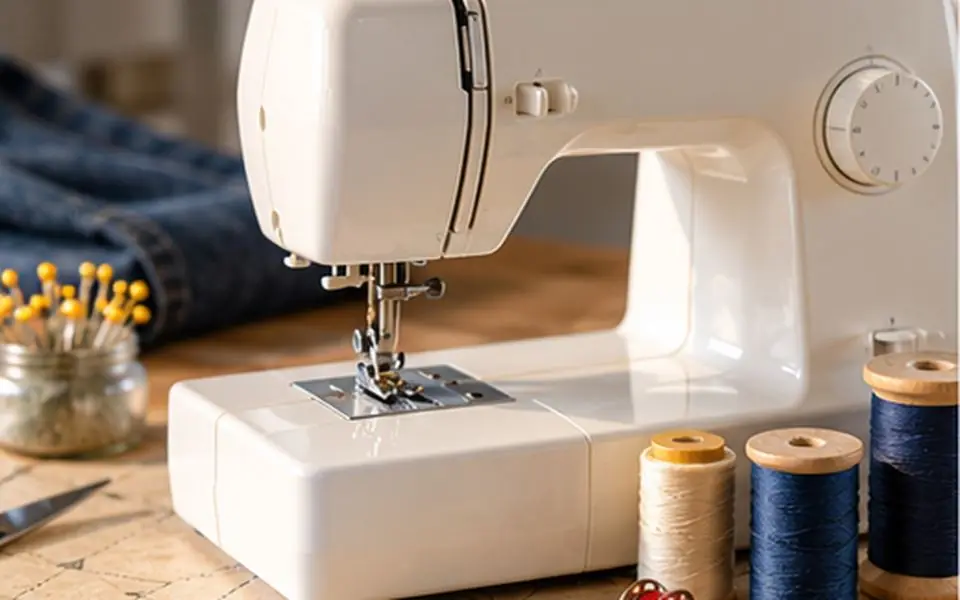
How to Choose Your First Sewing Machine
Which sewing machine features a beginner will use, which to ignore, what changes as the price rises, and how to test a used machine before paying.
 Machine sewing
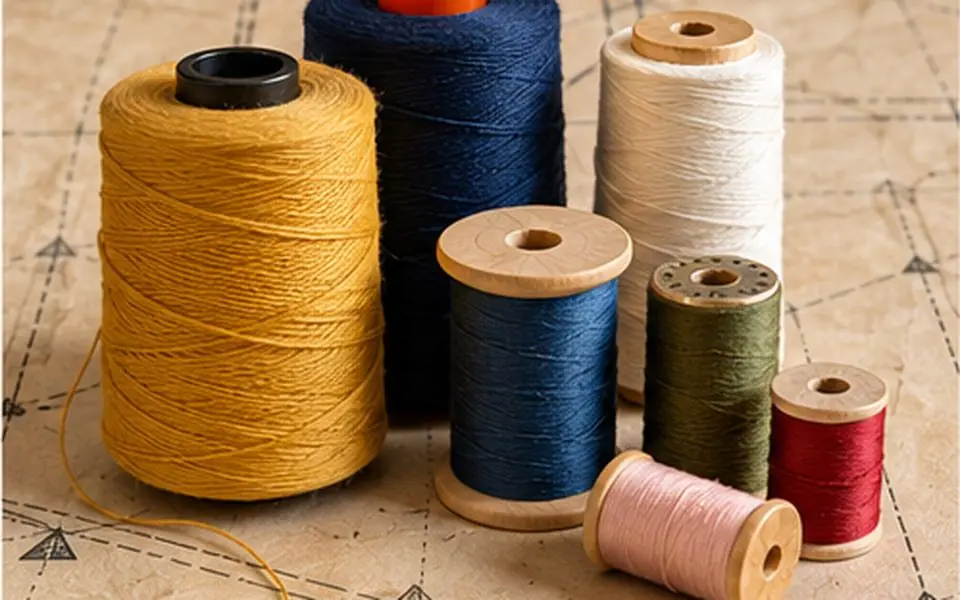
Sewing Thread Types and Weights Explained
How to read thread weight and Tex numbers, which thread fibre suits which fabric, and how to pair thread with the right machine needle size.
 Machine sewing
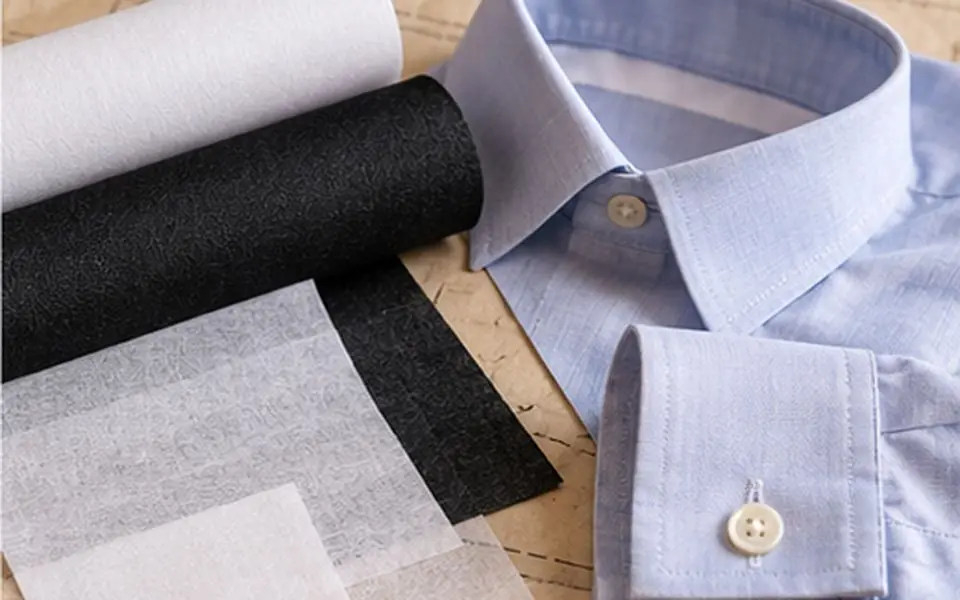
Interfacing Explained: Types, Weights and Fusing
What interfacing does, how to choose between fusible and sew-in, woven, non-woven and knit types, and how to fuse it so it never bubbles.
 Fabric and care
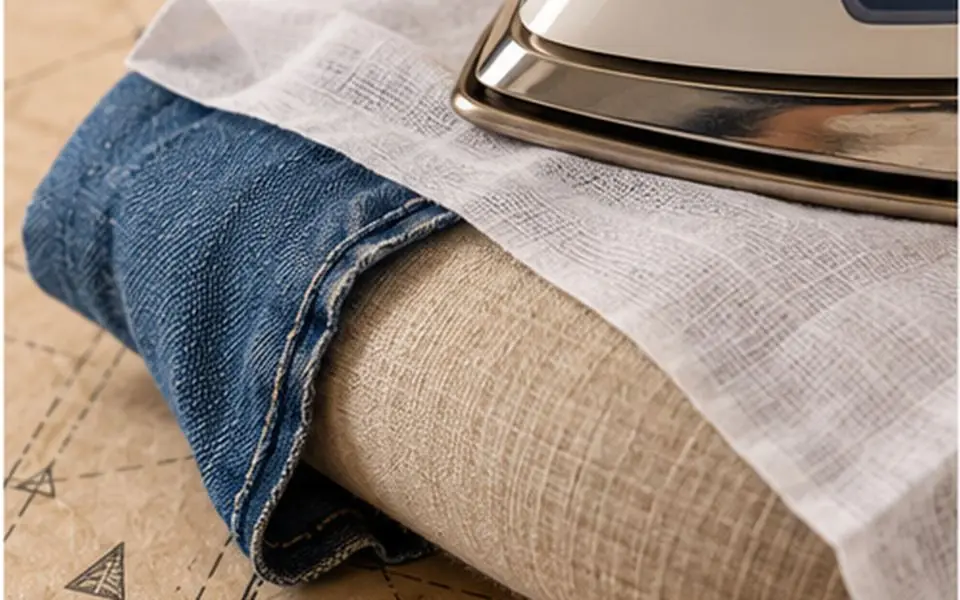
Pressing for Sewing: Iron Temperatures by Fiber
How pressing differs from ironing, the right iron heat for each fiber in F and C, when to use steam and a press cloth, and how to avoid shine and scorch.